The guy in charge should have experience.
He needs to understand the lay of the land. He needs to appreciate the opportunities that others are missing. He is wary of the variables working against him and he has a track record of contingency planning to work around these conspiratorial elements.
Most of all, he has a vision. His leadership is imbued with a sense of mission and purpose. He knows where he is going and why, and that’s the alchemy attracting others to his side.
These qualities of focused wisdom and wariness are obvious and abundant in any study of the nexus between Islam and the story of Black America. But we’re going to sketch it out anyway because we’ve learned that what is plain is too often ignored.
Or dismissed.
With God’s help and permission, we’re going to make it very hard to ignore or dismiss a consideration of Black America as the primary incubator of Muslim leadership in the western hemisphere.
Origins
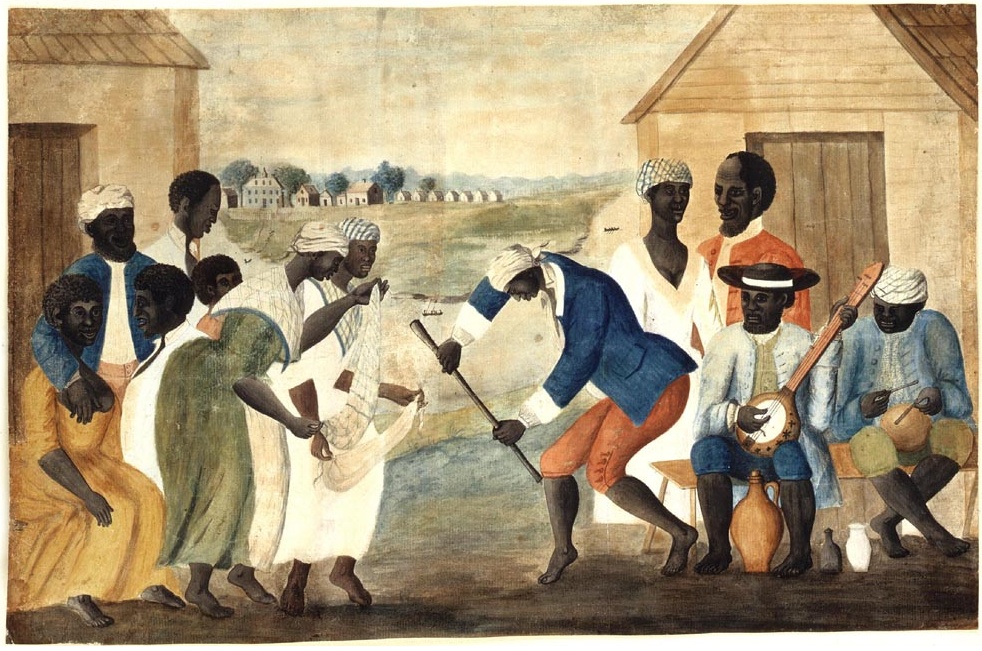
During North America’s colonial period, indigenous peoples were forcibly displaced and enslaved by religiously delusional European invaders. In addition to their zealotry, these intruders also brought along some pretty nasty diseases which wiped out their forced labor pool. By the 1650s, with no inclination to actually do their own work, they turned to the transatlantic slave trade to fill the gap.
In so doing, these lazy cultists brought Islam to our shores en masse. Some 20-30% of the men, women, and children brought over from West Africa were Muslim. A significant number held to their faith, however many were forcibly converted to Christianity. Even so, these reluctant apostates were not so quick to shed their spiritual and cultural birthright. We can still appreciate the traces of this early Black American Islamic influence as noted in this article:
However, if Islam as a lived religion died out in the Americas, it was passed on in other ways through the influence of various cultural traditions still prevalent today. African-style Muslim amulets can still be found in places like Brazil. Arabic words made their way into music as far afield as Peru, Cuba, Georgia and Trinidad. Historian Michael Gomez even suggested that blues and jazz were influenced by West African Muslim musical styles and motifs; Islamic legacies have played an important role in shaping American rap music.
And while I’m Muslim and more than happy to go along with suggestions that the richness we continue to appreciate from the tragic legacy of these enslaved peoples is a consequence of their faith, I think that’s only part of the story. Islam is a choice and people opt in and out, sometimes voluntarily and sometimes under duress. Four hundred years ago, the influence of Islam among West African slaves was far more significant than it is among their contemporary Black American descendants.
But Black America continues to shape culture, perhaps more than any other single demographic.
There is something else at play. Something far more intrinsic than religious choice.
Improvisation
I spent the 2026 Eid al-Fitr holiday in Philadelphia. After the celebratory morning prayer, my family and I went out for halal soul food. Our meal was a smorgasbord of history, intention, struggle, collaboration, creativity, and impossible optimism.
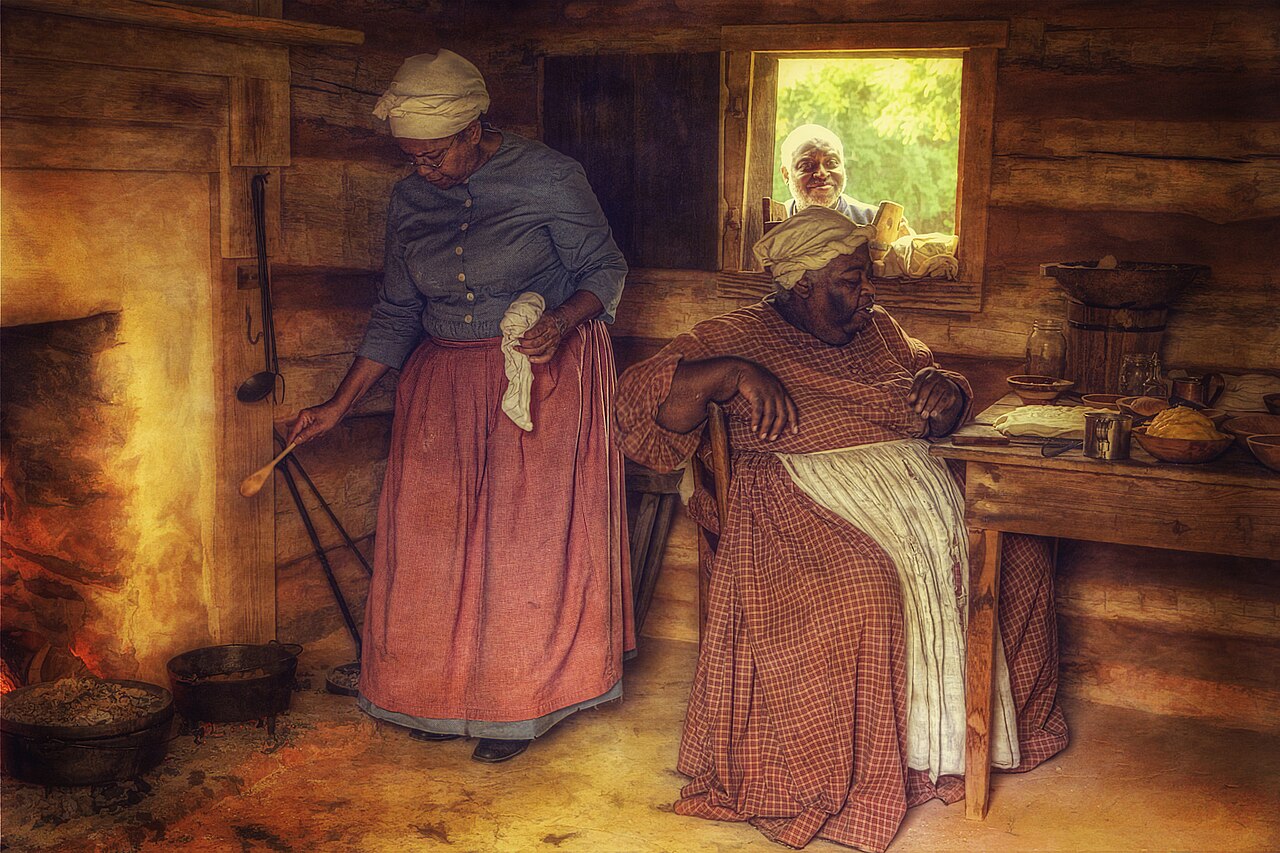
Stories are told about how rice, okra, and millet came to North America through the proactive ingenuity of enslaved African women hiding the seeds in their braided hair. These people built an entire cuisine out of contraband, foraged items ignored by others, and the scraps left by slavers who considered them inedible.
It was the most delicious meal I’ve had in ages. It fed more of us than it reasonably should have. It was absolutely blessed food.
But the legacy and influence of soul food is hardly Islamic. There is a lot of pork in traditional soul food which is wildly popular across all demographics throughout North America’s southern states. What we ate was a modified and restricted take on the original which is grounded not in Islam, but in a shared history of displacement, marginalization, oppression, and most importantly, survival.
And the survival strategy they employed to the greatest effect was improvisation. These people were not just making do.
They were making new.
The improvisational nature of Black American culture is what makes it forever compelling. But they’re not just peddling novelty. Rather, this is innovation within the greater context of liberation.
The Black American influence across the domains of food, fashion, athletics, entertainment, linguistics, and civil rights advocacy is unmatched on these shores by any other single ethnic group. What we eat, how we dress, how we speak, and the manner in which we pass our time is colored by the infectious improvisation of Black American liberation culture.
It’s important we note that this is completely independent of any faith they might individually practice.
Archetypes

We all know the story of Bilal ibn Rabah. His true ethnicity is a matter of scholarly debate, but his status as both “Black” and “slave” are well ingrained in the collective Muslim consciousness. He was designated by Muhammed (s) as the first of his companions to offer the adhan, or the call to prayer which can now be heard five times a day every day in Muslim-majority countries.
Through the ever-present trope of bias-revealing marginalization, we are taught the Bilal story primarily as an example of Islam’s purported egalitarian spirit. Bilal’s “blackness” is hijacked to support a thesis that our faith is more supportive and tolerant of diversity than other religions. It’s as if mainstream academic Islam has reduced the entirety of Bilal’s person and legacy to a collective assertion of “We’re not racist- we have Black friends!”
For shame. Bilal is much more than a DEI hire.
In an important contrast, we see that other Muslims contemporary with Bilal were celebrated instead for their person, aggrandized even to the level of archetype. Abu Bakr has come to personify the very attributes of clemency and forbearance. Umar ibn al-Khattab is might and justice. Uthman ibn Affan is modesty, and Ali ibn Abi Talib embodies mysticism and the gnostic’s path. Of course, they were all in positions of ultimate authority and we might attribute a hagiographic tendency in their elevation from historical figure to theme incarnate.
Except they are not the only persons we have taken as archetypes. The Prophet’s (s) wife Khadija bint Khuwaylid remains the example par excellence of what it is to be a Muslim wife and mother. The companion Abu Dharr is oft-regarded as the progenitor of populist counterculture, and Salman al-Farisi, who abandoned the comforts of Persia for a hardscrabble life in Medina, is today heralded as the forefather of those who would seek truth above all else.
Yes- we learn of Bilal’s steadfastness in resisting the torture of his cruel master, but he is not situated in the collective Muslim consciousness as a symbol of resistance. There were many who suffered among the early Muslims and held to their faith regardless. We may have internalized a sense of commitment to our faith from these aggregated histories of constancy, but Bilal is not advanced as our locus in this regard.
What ultimately distinguishes Bilal from literally everyone else is the Prophet (s) designating him as the one who calls others to the communal prayer. This must tell us something about Bilal and not just about Islam’s racial impartiality. And if we understand the centrality of prayer in Muslim life, we might start to think about his designation differently.
A Culture of Prayer
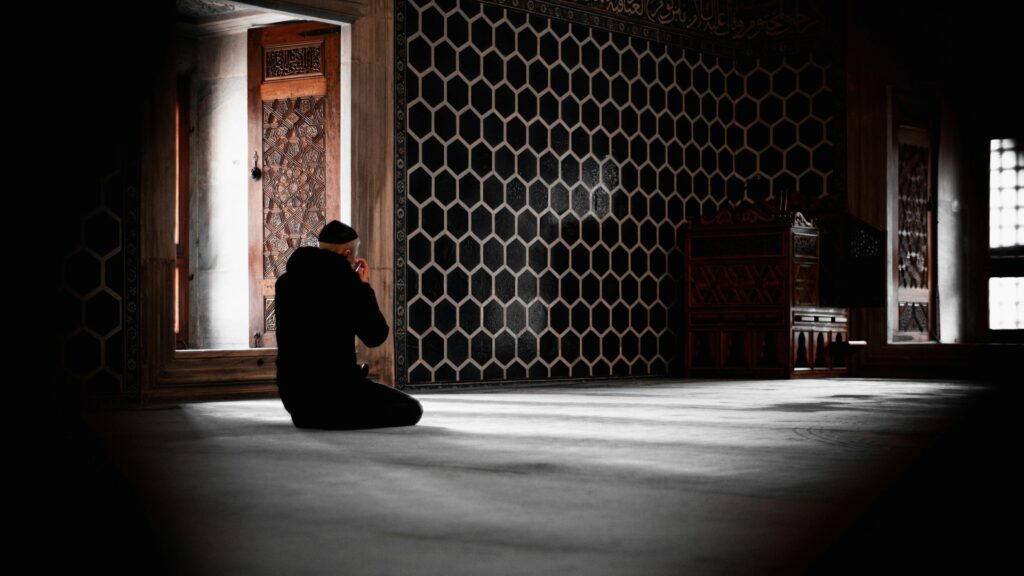
Islam is associated with prayer as a visible, communal, and obligatory act. It is the hallmark of our culture. Visitors to majority Muslim communities will witness traffic lighten and shops close as people rush to the mosques on Fridays, faces damp with the waters of ablution and perhaps a rug tucked under one arm.
But before all of this, they will hear the call.
As with many things in Islam, there is a debate as to who gave Bilal the words to say. Some say it was the Prophet, may the peace and blessings of God be upon him. Some say it was another contemporary companion who received the words in a dream. Regardless, it was Bilal who was given the task of bringing these words to life.
And if you travel enough, the call will sound different from person to person and place to place. The same words, the same intervals throughout the day, but differences in rhythm and melody. Some renditions will be plaintive and longing, others more martial in character, like a command or a challenge.
Improvisation.
The call is imbued with the improvisational character of a man whose survival depended on his cultural ability to adapt. Some say he was the son of an Abyssinian princess who had been abducted by Arabs and sold into slavery. Before Islam and its celebrated egalitarianism, Bilal and his parents before him were already improvising their liberation through adaptation to these new realities. It’s related that Bilal heard about Islam through the bitter murmurings of the slavers around him. Common sense survival would suggest loyalty to his keepers as the best strategy, but he recognized the resonance of liberation in these sniveled bits of theology. He saw deliverance from his plight in the adoption of a religious narrative that only confirmed what he already suspected as part of his cultural legacy:
Freedom is a state of being. It is contingent neither upon circumstance nor expectation.
This is the mantra of the oppressed, and our melanated sisters and brothers born into globalized colorism appreciate this as a lived reality through their ceaseless improvisation.
Like the jazz musician and the freestyle verse of a hip-hop MC. Like the women who bake leftover beans into one of the most delicious pies imaginable. Like the linguistic choices of the plantation men who knew they were being listened to. Like the civil rights activists who understood that changing one’s seat on the bus would start a revolution. Like the heavyweight champion of the world who got there floating like a butterfly and stinging like a bee.
There is no one better qualified to inaugurate the rhythmically and melodically dynamic call to prayer that we are still answering some 1400 years later than the one who has fully internalized the opportunities for liberation within the ritual. Bilal was that man, one of only ten promised Paradise during the lifetime of the Prophet, may the peace and blessings of God be upon him.
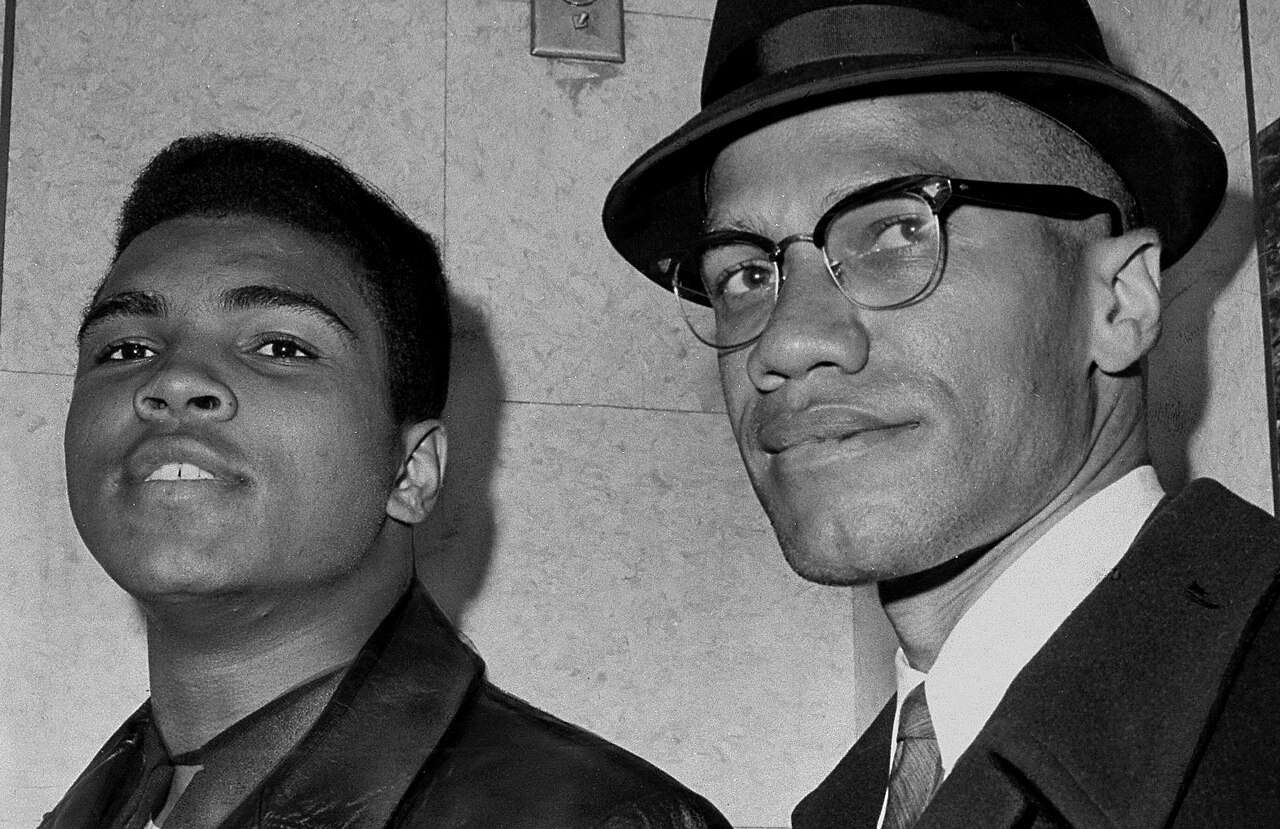
And when we Americans consider Islamic leadership at the revolutionary level, there is only one man who comes to mind.
Our venerable brother Malcolm X is improvisation personified. He lived at least four entirely different lives: the preacher’s son, the street hustler, the Black Nationalist, and the orthodox Muslim. Every iteration was a response to circumstance. He came to this latter state through his immersion in Islam’s culture of prayer while making his 1964 pilgrimage to Mecca:
I have prayed in the ancient city of Mina, and I have prayed on Mt. Arafat. There were tens of thousands of pilgrims, from all over the world. They were of all colors, from blue-eyed blonds to black skin Africans. But we were all participating in the same rituals, displaying a spirit of unity and brotherhood that my experiences in America had lead me to believe never could exist between the white and non-white. America needs to understand Islam, because this is the one religion that erases from its society the race problem.
Throughout my travels in the Muslim world, I have met, talked to, and even eaten with people who in America would have considered ‘white’— but the ‘white’ attitude was removed from their minds by the religion of Islam. I have never before seen sincere and true brotherhood practiced by all colors together, irrespective of their color.
You may be shocked by these words coming from me. But on this pilgrimage, what I have seen, and experienced, has forced me to re-arrange much of my thought patterns previously held, and to toss aside some of my previous conclusions.
We were careful to mention in our opening paragraphs that it is in the intersection between Black America and Islam, the nexus, that we find the wariness and wisdom of able leadership. The above excerpt from Brother Malcolm is a clear example of this. His improvisational approach to liberation and survival preceded his introduction to Islam’s culture of prayer.
When these things come together, entire histories shift.
A Dedication
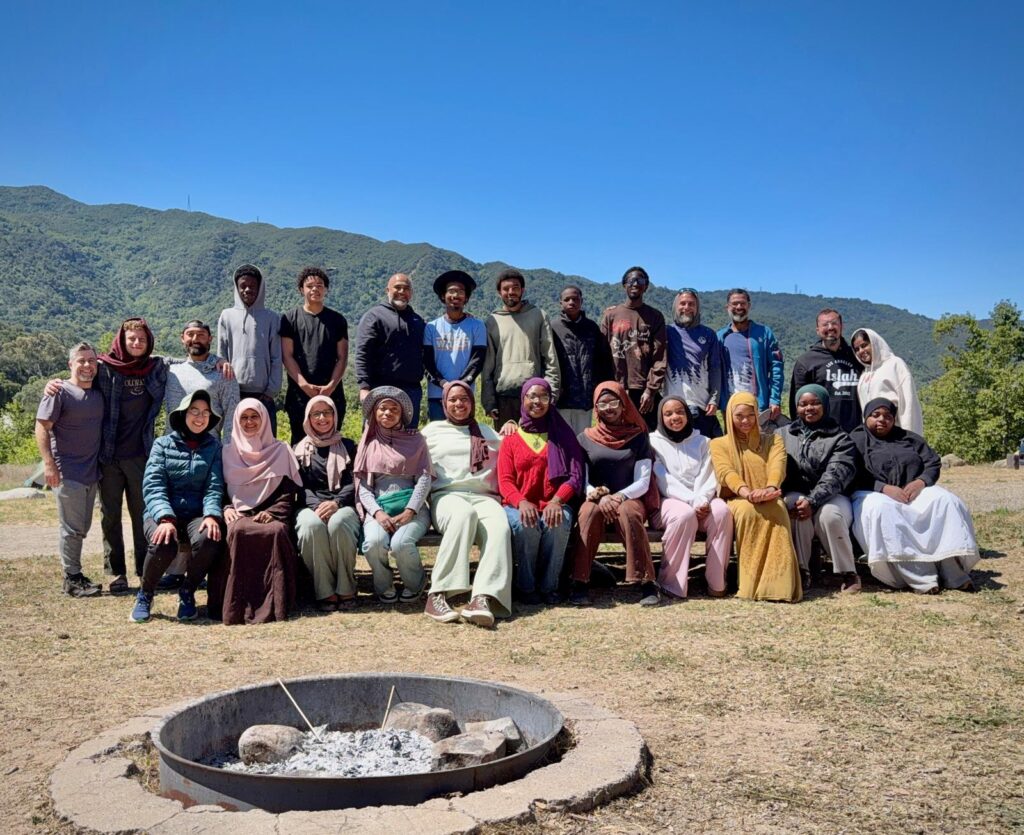
This piece was inspired by discussion and reflection in the aftermath of our recent collaboration with Islah LA. This was our third outing with their community and every time we think it can’t get any better.
But expectations are always exceeded, subhan Allah. And this is how you recognize greatness.
These are not a perfected people. If we believe that the future of Islam in the western hemisphere turns on the Black American Muslim community, it’s largely because of how well they manage imperfection. Discrimination, generational trauma, police surveillance, profound socioeconomic disparity, and persistent marginalization from their own faith community are only a few of the challenges that make up their day-to-day existence. Some days they’ll handle better than others, but they’ve had going on 400 years to practice. Even on their worst days you can still intuit the power and resilience of these young men and women.
There is no other Muslim group on this side of the Atlantic with comparable experience in navigating America’s unique approach to systemic oppression. Many of us are unknowing beneficiaries of the system and we prop it up through our choice of language, who we allow our children to marry, and where we choose to live. Those of us in league with the oppressors, even in ignorance, cannot be relied upon as leaders toward a better future.
Rather, this is work that we will, insha Allah, improvise in deference to the sons and daughters of Bilal.
Leave a comment below for posterity or join us in the D&T Chautaqua Discord to discuss this post with other adventurous spirits from around the world.
Allahu akbar!!!!!!!!!!!!