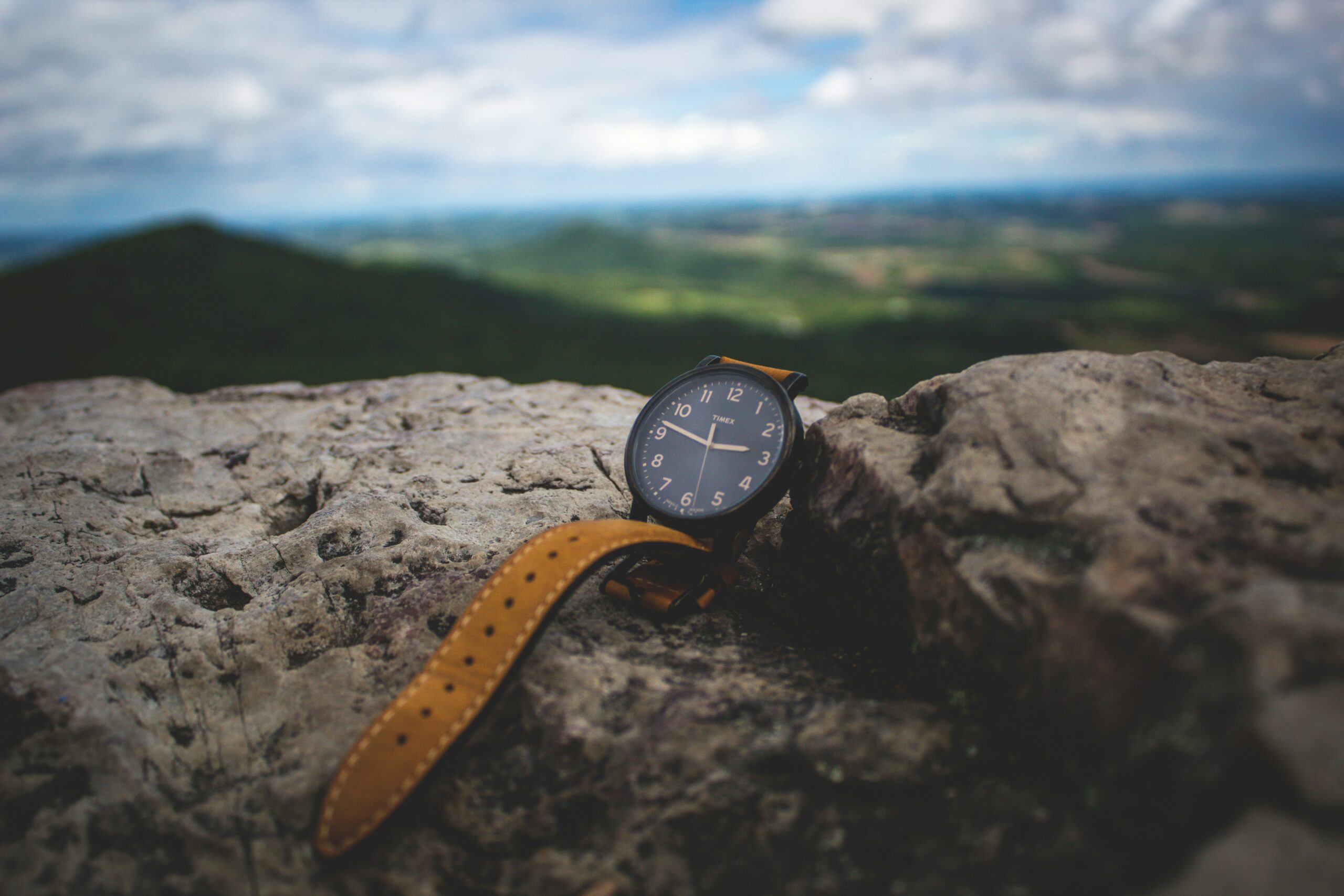
Dust and Tribe is proud to feature this guest post by Jibreel Abdul Cader, D&T Adventure Lead and Medical Coordinator.
My brother-in-law is an incredible athlete who often measures himself the way athletes do: heart rate, elevation gain, pace splits, all of it logged to a watch that claims to knows more about his body than he ever could. So it caught my attention when, the morning we set out from Lodgepole into the Sequoia backcountry as part of an annual family hiking trip with my in-laws, he left it behind. No tracking, no numbers, nothing pulling him out of the mountain and into a screen.
He didn’t explain it and he didn’t ask anyone to join him. He just walked out into the wilderness with his wrist bare, marked by a tan line of where the watch was.
I was wearing my late grandfather’s analog watch. Simple hands, no brand worth naming, no complication beyond telling the hour and the minute, but it was still a machine built to slice the day into equal, indifferent pieces. Watching my brother-in-law let his go, I felt something loosen in me too. What if there were no time up here? Just the sun, just the shadows, just the moon. He hadn’t invited me in words. He’d invited me in example. So at camp that first morning, I took the watch off and put it away, leaving it at the trailhead.
Unlearning
The first hours were the hardest to unlearn. My hand kept drifting toward my wrist, my mind kept reaching for a number that wasn’t there, how long have we been climbing, how much further, what hour is it. When someone in the group mentioned a distance we’d covered, I found myself doing the math backward, trying to reconstruct minutes from miles, trying to rebuild the cage I’d just stepped out of. But my brother-in-law never asked what time it was. Not once. I watched him settle into a different rhythm entirely, one set by breath, by the ache in his legs, by how the light sat on the rock. He wasn’t ignoring time. He was listening to a version of it that didn’t come from a machine.
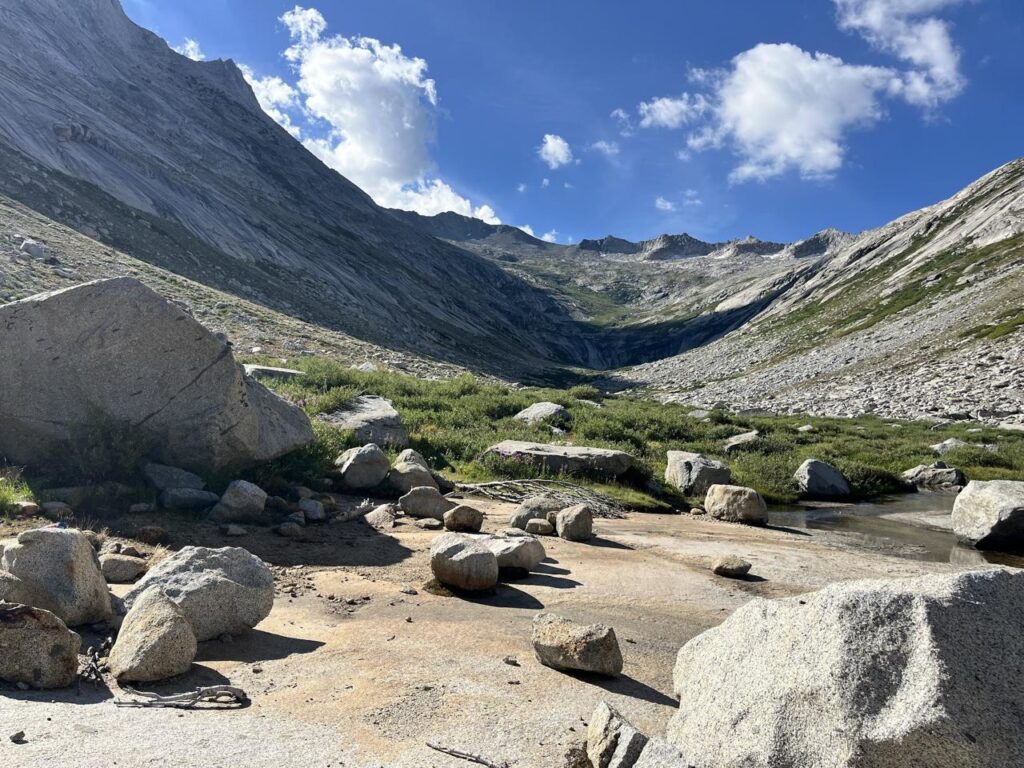
That rhythm became unmistakable by the time we ascended from Roaring River into Deadman’s Canyon on our third day. The canyon runs roughly north to south, as was the direction of our travel, its granite walls rising on either side like the two hands of some enormous, ancient clock, except this clock had no numbers, only light. In the late morning, just as we left camp, the sun light cleared the eastern wall on our left shoulder and threw its shadow west, and as we walked, that shadow crept slowly across the canyon floor, retreating up the eastern wall as the sun climbed toward the top of the sky.
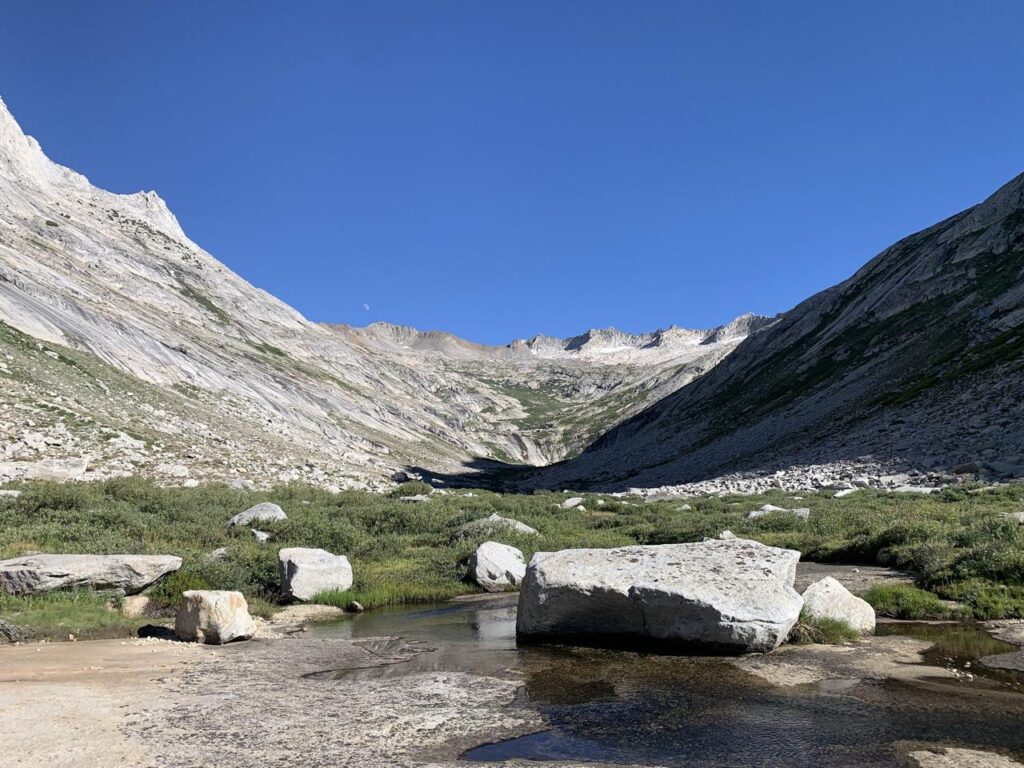
By midday the sun stood directly overhead and the shadow vanished into the rock beneath our own feet. Then, as the day leaned on, the whole thing reversed. The shadow reappeared creeping down from the ridge of the western wall on our right shoulder, across the valley floor, and on to the eastern wall this time, climbing as the western peak began to swallow the light, until finally the last of it was pure aspenglow, that impossible rose-gold burning across stone before the sun let go entirely. Then the moon rose over the left eastern shoulder we’d just watched go dark, and began its own slow crossing to the other side, and casting shadows along the way.
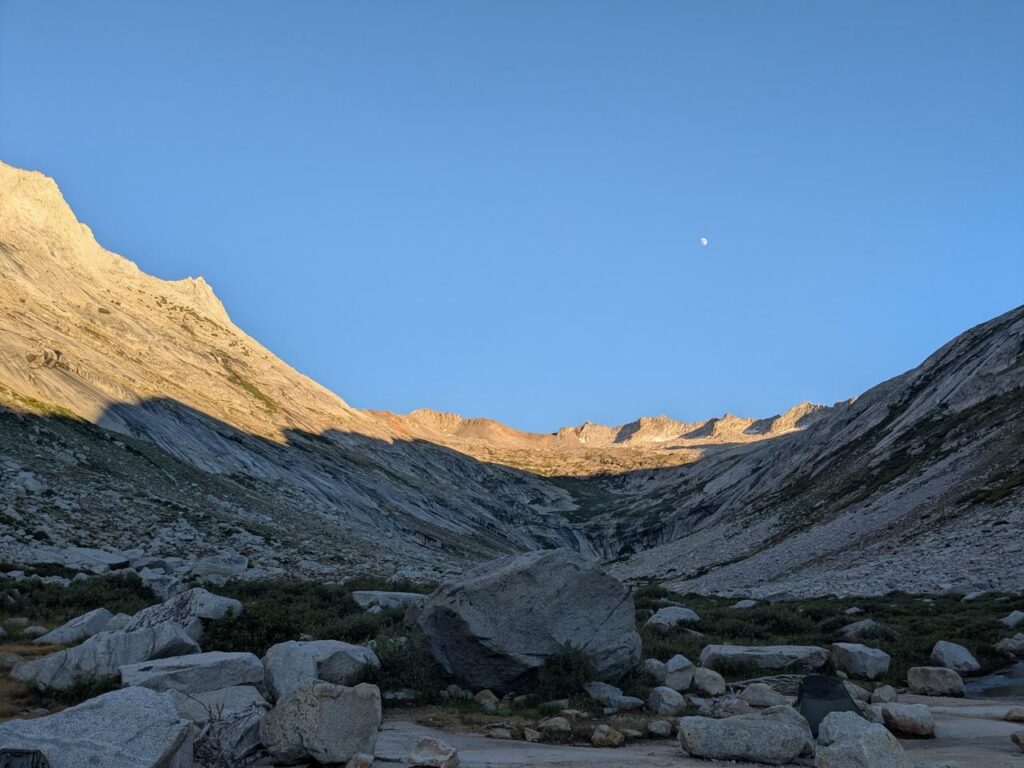
We made camp on a wide granite slab at the edge of a clear, slow-moving stream, small trout holding still in the current. After dinner, while my wife journaled, I lay back on the rock and listened to an episode of the Dust and Tribe podcast, a reflection on a favorite hadith, with the granite bowl of the canyon around me and moonlight standing in for every lamp I didn’t have.
Reorientation
Something about hearing it there, with no clock anywhere in reach, let the words land differently than they would have at a kitchen table with the evening news waiting behind them. It was in that moment, more than any other on the trip, that I understood what had been happening to me for days. I had stopped thinking in man made hours designed to clock in and clock out, and to make start times and deadlines. I started thinking in God-given light: sunset, dark, moonrise, first light, the sun’s own glow returned to me secondhand off the face of the moon. Suddenly wakefulness and reflection and life itself did not necessitate working hours. Shadows on stone, shadows thrown by trees, the shadow of my own body were the only clock I had to orient myself and my prayer, and they were enough. Morning came the same way it always had, before any of this. The sky simply warmed with fajr, no alarm required, just the world announcing itself.
Looking back, the man-made version of time feels almost synthetic against that memory, small, insistent, built to cut and mark and categorize something that was never meant to have a start or a finish. It puts you in the business of asking when something begins or ends, instead of asking where you are within it and what you’re a part of.
My brother-in-law didn’t hand me a lesson. He just took his watch off and let the mountain set the hours instead. I’m still learning to leave mine at the trailhead.
Leave a comment below for posterity or join us in the D&T Chautaqua Discord to discuss this post with other adventurous spirits from around the world.
Beautiful reminder. We’re constantly relearning these lessons every time we go out: just how small or insignificant we and our man-made constraints are in comparison to the truth. True time, true sustenance, true dependence on Allah, etc. Thank you, Jibreel.
Jzk for saying so Anas. Alhumdulilah it was a special trip
lovely reflection, thanks for sharing! Funnily I’ve been reading Saving Time for the past few days.
I’ll take a look at that one!