
We live in a time of unprecedented polarization. This is intentional, aided and abetted by social media algorithms funneling us deeper and deeper into our respective echo chambers. Rage bait spikes our cortisol levels, driving risk-taking behaviors that incline us to spend in ways we normally would not.
Beyond “divide and conquer,” we have allowed a technologically mediated fleecing of Americans by corporate accelerationists who distract us with culture wars as they line their pockets in anticipation of impending social collapse. They get rich and we stop talking to our neighbors and family. We are now programmed to ridicule nuance and normalize immutable binaries. People are no longer allowed to change their minds.
Ever.
But for the first time in a long time, we may have an opportunity to change not just our minds, but everything else.
Alignment
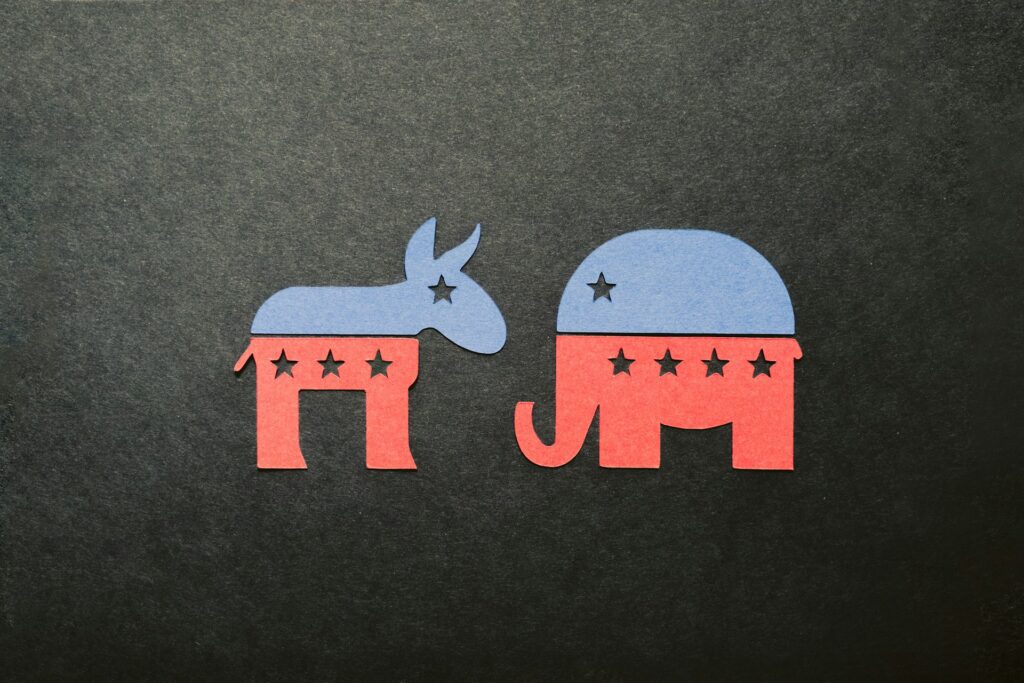
To some extent, politics has always been about choosing a side. And before 9/11, American Muslims chose the more conservative Republican party. Strong families and “traditional” values are Republican talking points that resonated with Muslims before Bush Jr. declared war on Islam after the WTC false flag operation.
In the 26 years since, Muslims have fallen in with the Democrats. While obviously reactionary, there are two other very important and unflattering reasons for this new alignment.
Many immigrant Muslims refuse to see America as home. As a result, they avoid civic engagement and do little to support their local community. Rather than investing in regional infrastructure, they undermine our economy through a diversion of their earnings abroad. They are still hungry for community, however, and their solution to this lies in relaxing immigration policies to allow more of their countrymen into the insular subdivisions they are creating. They believe the Democrats will help them in the name of “diversity.”
But “diversity” in the political world can also be understood as weaponized reciprocity. American Muslim youth are demonstrating this through a shift in their personal ethics:
Among second- and third-generation Muslims coming of age in America, polls show their social attitudes have moderated in recent years. Many members of this rapidly growing community not only lean Democratic, but also embrace progressive views that are at odds with Republican orthodoxy.
https://www.voanews.com/a/muslim-americans-drifted-democratic-party/3496782.html
We could just as easily replace “Republican” orthodoxy with Islamic orthodoxy. Many young Muslims now understand their identity as inextricably linked to progressive talking points that have nothing to do with their religion. In contemporary binary politics, the tit-for-tat social contract is evident. If homosexuals and trans-rights activists stand up for Palestine, Muslims must sanction gay marriage and “gender-affirming care.” Worst of all, millennial Muslims now see themselves as a marginalized category of victimized peoples rather than understanding Islam as an ascendant faith tradition accessible to all people in all places at all times.
This shift away from the subtle and dynamic positions of a 1400 year-old body of religious wisdom toward a mic-drop morality shaped by trending TikToks is a direct consequence of fear and lazy thinking. Social media fosters both of these things. Using the platforms for free masks a cost that reveals itself when someone suggests abandoning them. We suddenly cannot imagine life without our feeds.
That level of loyalty should be reserved for only the most sacred contracts. Actions speak louder than words, and if we are beholden to our social media accounts, we must recognize the extent to which the medium has permeated our consciousness. We are the algorithm. We picked a side and warped our beliefs into compliance.
Wholesale adoption of either party platform at the expense of our primordial covenant with God is obviously idiotic. But people who play the game often say they have no choice. That was never true.
And that’s more obvious than ever before.
Gaza
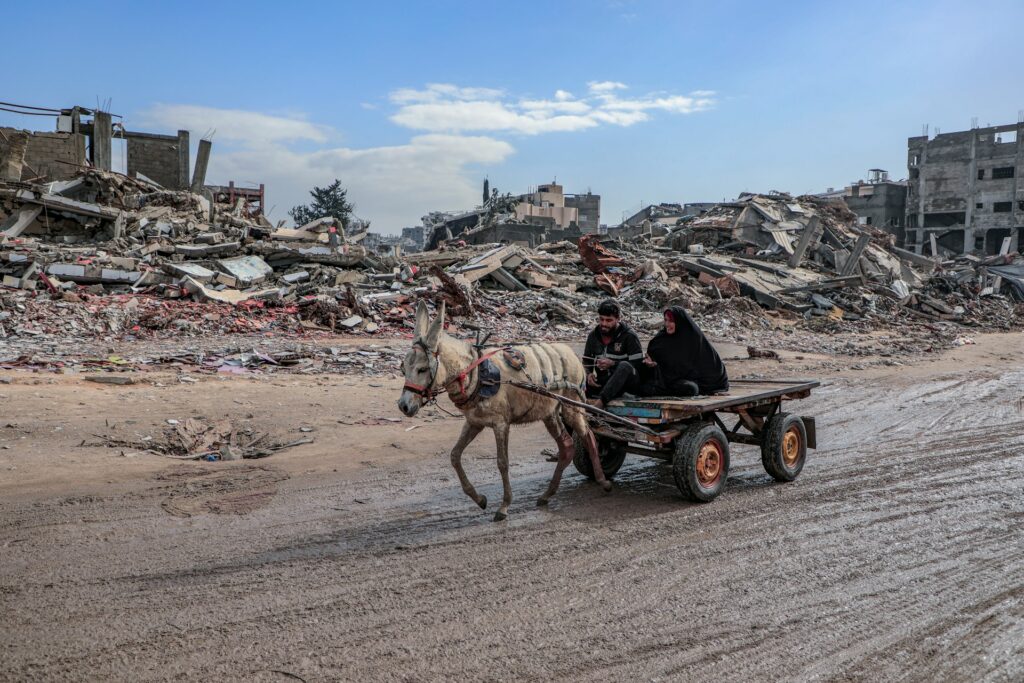
Blogger Aamir Khanzada describes Gaza as “a moral stress test.” Although the context for his statement is not directly related to Muslim political power in American, his statement has validity across a number of societal domains. Gaza has rumbled fault lines into establishment politics, fracturing both parties in remarkable ways.
Gaza revealed that old-guard Republicans and Democrats are only slightly different shades of Zionist. Both parties are heavily funded by AIPAC and other pro-Israel lobbyists. They are indifferent to the needs of the American people, seeing in their appointments an opportunity to curry favor with monied oligarchs. Such conduct is ushering the United States into an extended period of third-world despotism.
They will succeed in this, by the way. Andrew Callaghan of Channel 5 has argued that JD Vance will be “America’s last president.” The American democratic republic is in its final death throes and it makes no sense to continue playing by the old rules.
But between now and the inevitable end, there are some (possibly) new players to consider: the Democratic Socialists and the Anti-Trump Republicans. Both groups have taken the position that Israel is far too enmeshed in American politics. The veracity of this position varies with each person, but it includes everything from economic and cultural divestment to outright calls for war against the apartheid state.
Of course, there are pundits who believe these developments to be nothing more than strategic bids for younger voters: same parties, updated marketing.
Regardless, millennial Muslim politicians have unsurprisingly fallen in with the liberals. It’s a natural extension of their generation-specific bias constantly reinforced by social media algorithms. New York’s Mamdani and Michigan’s El-Sayed are making headlines at the moment, but there will be others.
While this alliance makes sense from a reactionary perspective, the choice of Muslim politicians to align with so-called progressives is ideologically dissonant. Democratic Socialists are held together by an ever-evolving set of secular liberal “values,” a moving target that Muslim candidates must constantly reconcile against their preexisting Abrahamic covenant. In contrast, many of the anti-Trump Republicans already see their politics as an extension of their Christian faith. They espouse the same Abrahamic morality as Muslims and religious Jews. They are comfortable with religion guiding public policy. There would seem to be a natural affinity for the Muslim politician in this camp.
But instead of seeing the Abrahamic nexus, instead of recalling God’s statement that the most gracious toward the believers are “those who call themselves Christians,” (Q5:82), we lean into algorithmic groupthink and deride them as xenophobic “Christian Nationalists.”
Something to think about, but Muslims choosing Republican or Democrat is not the point of this post.
The point is that the current popular support for Muslim politicians could be very exciting if we recognize the bigger, post-apocalyptic opportunity.
Muslims are suddenly in a position to shift public discourse altogether. The American public is listening. People want change. They recognize Islam as morally formidable and power is always attractive. New is always interesting. Our status as an enemy to the American project is now increasingly understood as an Israeli psyop. And if we are not a threat, can Muslim power remediate the widening disparities in American society?
This final question will become immediately relevant to every American in the post-republic dystopia of the coming decade. The danger here is that Muslim political hopefuls will continue to play party politics, muzzling their faith in keeping with partisan ideals. And if we insist on sacrificing our faith to the altar of two party politics, we offer nothing.
In reality, the Muslim’s worldview straddles both liberal and conservative camps, and this is where the potential for communal healing lies. We have a vision that shatters the algorithms. Our emphasis on hospitality, generosity, and safety inclines the Muslim to support universal healthcare and secure borders. We enthusiastically support the right to bear arms and have a nuanced appreciation of a woman’s option to abort her unborn child. We don’t sanction gay marriage because the state has no interest in relationships that are an evolutionary dead end, and neither do we make the bedrooms of others our business.
Tunnel-Vision

Have we forgotten that Islam is the middle path?
Have we become so comfortable in our digital ghettos that we’ve lost sight of who we are or where this is all heading?
Don’t get this wrong. There is no need to create an “Islamic” party. That would be stupid. Please don’t anybody do that. This would be playing into the “jihadist/shariah law” fear-mongering of critics who understand the transformational power of Islam but have a stake in the status quo. We would also embarrass ourselves irrevocably with our own infighting around what an “Islamic” party even represents.
More to the point, however, is that the age of party politics is drawing to a close. Things are about to get much more tribal.
The opportunity is for the Mamdanis and El-Sayeds of the future to break with the expectations of their political base, in keeping with their professed faith.
We’re already seeing this with conservative thought leaders like Candace Owens, Tucker Carlson, and Thomas Massie. Breaking with party dogma confuses and excites constituents on the other side of the aisle because it’s surprising. The surprise leads to questions, introspection, and dialogue, all important components of a healthy community.
That’s the conversation we want to be a part of. Finding common ground now is necessary to rapidly establish the security required to rebuild.
The masses will require direction in the collapse to come. This is our opportunity to show America who we are.
Leave a comment below for posterity or join us in the D&T Chautaqua Discord to discuss this post with other adventurous spirits from around the world.
This is so important. We really need to be having this convo on the community level.